
Tea for the Algorithm
Why We Are Moving Past the Fantasy of the Homestead

There is a pervasive fantasy that our generation seems to hold. It usually looks something like this: throwing your smartphone into the ocean, moving to a remote homestead, and spending the rest of your days baking bread and tending to the chickens.
It is a seductive idea. In an era of relentless notifications, algorithmic feeds, and digital burnout, this idea really doesn’t sound too bad. Are you sold yet?
But if we are being honest with ourselves, most of us don’t actually want to leave society.
Most of us are not the modern version of Luddites. We appreciate the connectivity of the internet. We rely on the efficiency of modern systems. Many of us are fascinated by the potential innovation technology holds for us (with many equally as frightened). Yet, we recognize that we live in a technologically centered society, and for better or worse, we want to remain a part of it. It’s what we know.

The tension we feel isn’t a desire to abandon modern technology; it’s a realization that we are not fully satisfied by it. That it is merely a tool in our lives, that has shapeshifted itself into being the center of many of our lives.
I see this as the loss of the Old World. Practices of care and patience have transformed so rapidly and aggressively that we have engineered humanity out of our lives in many regards.
And now, the answer I see is not abandonment of the Old, nor a full embrace the New. It’s how can we find coexistence?
This is the premise of Tea for the Algorithm. It is an exploration of how we can inhabit this New World without losing our center. How we can invite the Old to sit down with the New? This is all about refusing to sacrifice our classical humanity at the altar of efficiency. And too, we must not restrain the will of innovation, for that is just as human as old craftmanship is.
We don’t have to choose between the tea and the machine. We just have to learn how to serve one to the other. Just like using a kettle to make your tea.
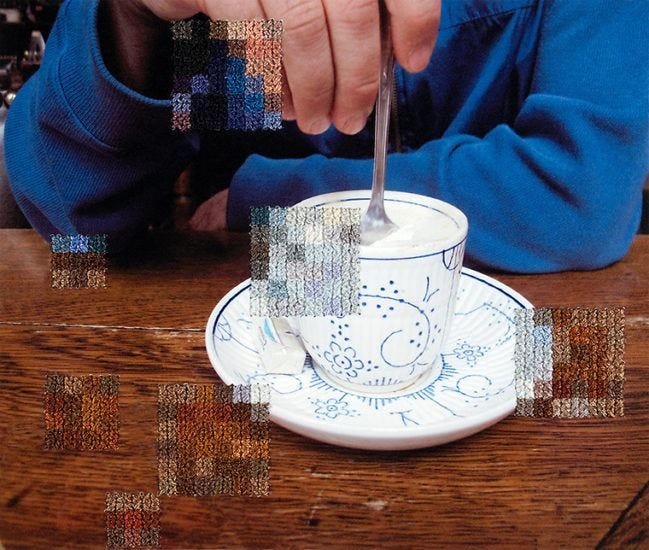
To understand this coexistence, we have to look at the strange timeline we are living in. I’ve been fascinated by the resurgence of Medieval comparisons in modern life; ideas like technofeudalism and the like are floating around more than ever in the digital space. We are beginning to witness the rise of a new archetype: the high-tech antiquarian. These are the people deeply intertwined with the machine at work, who seek the tangible world in their time off.
You see it in the engineer who spends weekends woodworking or throwing clay, using their hands to shape something permanent after a week of building code that feels like it lives in the void.
You see it in the writer who uses AI to organize their company’s strategy, but insists on journaling with a fountain pen.
And the most common being the widespread return to film photography, not because it is technically superior, but because that medium captures a little bit more soul.
We are learning that we need anchors more than ever. The pull of technology is stronger than it has ever been. And yet, the digital world, in the grand scheme of history, is still new to us. As it becomes more instantaneous, it is easier than ever to feel like we are floating away without that counterbalance of human simplicity.
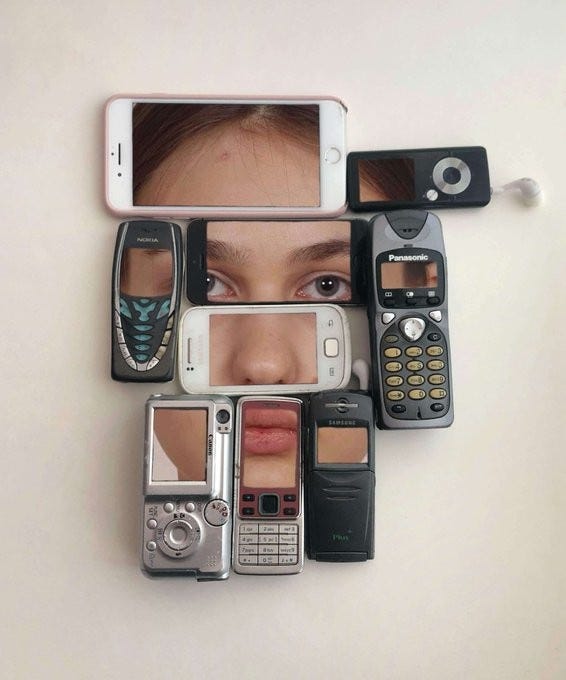
We are seeking a coexistence where the New World amplifies our capabilities, but the Old anchors our spirits. It is a delicate dance, serving tea to a machine that never sleeps. But it is the only way I have found to keep the soul intact in a digital age.
The goal, then, is not to escape the algorithm completely, but to learn how to cultivate humanity within it. To find the pockets of time where the screen goes dark and our hands get to work. Nothing new or groundbreaking, just a little reminder as you scroll away on Substack.
The algorithm isn’t going anywhere, but neither are we, so we might as well get comfortable.